



Blog
5 Reasons Forklift Maintenance Is Essential for Your Business

Forklifts are essential equipment for warehouses, distribution centers, manufacturing facilities, construction operations and many other businesses. When a forklift stops working unexpectedly, the problem can extend far beyond the machine itself. Materials may stop moving, employees may be forced to wait and an entire operation can experience delays.
Regular forklift maintenance is one of the most effective ways to help prevent these problems.
A preventive maintenance program can help identify wear before it develops into a major repair, keep equipment operating efficiently and potentially extend the useful life of a forklift. It can also contribute to a safer working environment and help businesses better control equipment-related expenses.
Here are five important reasons why regular forklift maintenance should be part of your equipment management strategy.
1. Regular Maintenance Helps Keep Your Operation Productive
Productivity depends heavily on equipment availability.
When forklifts are responsible for loading trucks, moving pallets, supplying production lines or organizing inventory, even one machine being unavailable can create delays throughout an operation.
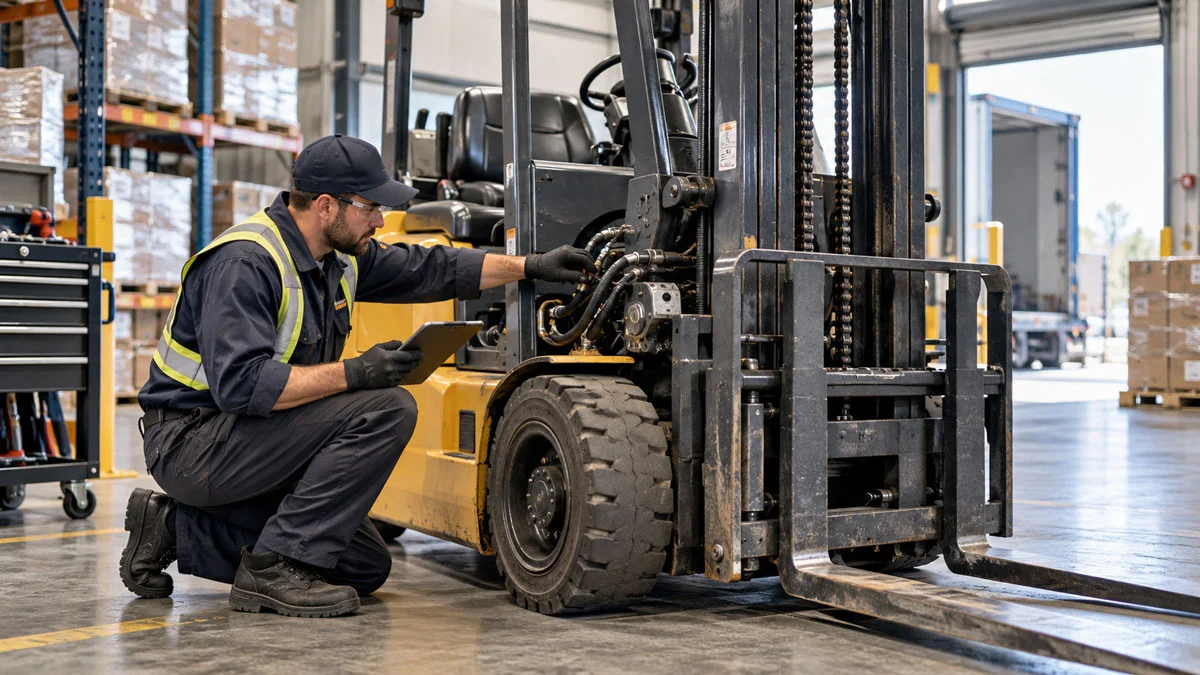
Preventive maintenance allows technicians to inspect critical components before a failure occurs. Instead of waiting until a forklift suddenly stops working, maintenance can identify developing problems while the equipment is still operational.
This can include checking components such as:
- Brakes
- Tires
- Steering systems
- Hydraulic hoses
- Lift cylinders
- Mast components
- Forks
- Chains
- Electrical connections
- Batteries
- Chargers
- Filters and fluids
Small problems are often easier to address when they are discovered early.
A hydraulic hose showing signs of deterioration, for example, may be relatively straightforward to replace during scheduled maintenance. If that hose fails during operation, however, the forklift could become unavailable unexpectedly and require an emergency repair.
Regular inspections therefore help businesses move from reactive equipment management toward planned maintenance.
2. Preventive Maintenance Can Reduce Unexpected Repair Costs
One of the biggest forklift maintenance benefits is the opportunity to identify problems before they become larger and potentially more expensive.
Mechanical components rarely go from perfect condition to complete failure without showing some signs of deterioration.
Leaks, unusual noises, excessive vibration, slow hydraulic response, irregular steering, battery problems and abnormal tire wear can all indicate developing issues.
Ignoring these symptoms can allow relatively minor problems to affect other components.
For example, a small hydraulic leak that is not addressed could eventually result in inadequate fluid levels or reduced system performance. A damaged electrical connection can lead to intermittent equipment problems. Worn tires can affect handling and place additional stress on other parts of the machine.
Preventive maintenance gives technicians an opportunity to inspect these systems and recommend corrective action before a more serious failure develops.
This does not mean regular maintenance will eliminate every unexpected repair. Forklifts operate in demanding environments, and components can still fail.
However, consistent inspections can significantly improve the chances of identifying predictable wear and maintenance requirements before they interrupt operations.
3. Following the Manufacturer’s Maintenance Schedule Matters
Every forklift is engineered with specific service requirements.
Maintenance intervals can depend on several factors, including:
- Forklift model
- Engine or power source
- Operating hours
- Application
- Environmental conditions
- Load characteristics
- Duty cycle
A forklift operating only a few hours per day inside a clean warehouse may have very different maintenance demands from equipment operating multiple shifts in a dusty or outdoor environment.
This is why businesses should follow the maintenance schedule specified by the equipment manufacturer.
Service intervals are commonly based on operating hours rather than simply calendar time. Certain components may require inspection, lubrication, adjustment or replacement after specific operating-hour milestones.
Following these recommendations helps ensure that important maintenance tasks are not overlooked.
Maintenance records are also valuable. Keeping documentation of inspections, repairs, replacement parts and service dates creates a history of the machine that can help technicians identify recurring issues and make better maintenance decisions.
4. Regular Maintenance Can Help Protect Forklift Resale Value
Forklifts are significant business assets.
Eventually, a company may decide to replace, trade or sell a forklift. At that point, the condition and maintenance history of the machine can become important.
Two forklifts of the same model and similar operating hours may have very different values depending on how they were maintained.
A machine with documented preventive maintenance, appropriate repairs and consistent servicing may be more attractive to a potential buyer than equipment with an unknown service history.
Maintenance can also help preserve the physical and mechanical condition of major components.
This includes the mast, hydraulic system, steering, drivetrain, battery compartment, electrical systems and operator controls.
Although normal wear is unavoidable, properly maintained equipment can demonstrate that the owner invested in keeping the machine operational throughout its service life.
For businesses managing fleets, maintaining equipment value can become an important part of the total cost of ownership.
5. Forklift Maintenance Supports Safer Operations
Safety is one of the most important reasons to maintain a forklift properly.
Forklifts routinely lift heavy loads, travel through areas shared with workers and operate in confined environments. Components such as brakes, steering, forks, chains, tires and hydraulic systems directly affect how the machine performs.
Regular inspections can help identify visible damage or excessive wear before the equipment is returned to operation.
Forks should be checked for cracks, deformation and wear. Lift chains require inspection for proper condition and adjustment. Tires should be examined for damage and excessive wear.
Brakes and steering systems must operate correctly, while warning devices, lights and other safety-related equipment should be inspected according to the manufacturer’s requirements.
Maintenance does not replace proper operator training or daily inspections, but it forms an important part of an overall equipment safety program.
Preventive Maintenance vs. Reactive Maintenance
There are two fundamentally different approaches to forklift maintenance.
Reactive maintenance means waiting until something breaks.
Preventive maintenance means inspecting and servicing equipment according to planned intervals with the goal of reducing the likelihood of unexpected failures.
Reactive maintenance can sometimes appear less expensive because a business is not paying for service until something goes wrong.
The problem is that equipment failures rarely happen at convenient times.
A forklift may fail while unloading an important delivery, during a busy production shift or when no replacement machine is immediately available.
The cost of the repair itself may only represent part of the financial impact.
Downtime can affect productivity, employee schedules, deliveries and customer commitments.
Preventive maintenance allows businesses to schedule service at more convenient times and gives fleet managers greater visibility into upcoming repair requirements.
What Should Be Included in a Forklift Maintenance Inspection?
The exact inspection procedure depends on the forklift and manufacturer recommendations, but several systems typically require regular attention.
The mast and lifting system are especially important. Technicians may inspect chains, rollers, forks, cylinders and hydraulic components for wear, leaks or damage.
Tires should be examined for excessive wear, cuts or other damage that could affect handling.
The braking and steering systems should be checked for proper operation.
Electric forklifts require inspection of battery connections, cables, connectors and charging systems. Internal-combustion forklifts may require engine oil, filters, cooling-system components and other engine-related maintenance.
Safety equipment and operator controls should also be inspected.
The objective is not simply to replace parts. A good inspection evaluates the overall condition of the forklift and identifies developing issues.
Electric Forklifts Have Their Own Maintenance Requirements
Electric forklifts generally have fewer engine-related maintenance requirements than internal-combustion machines, but they are not maintenance-free.
The battery is one of the most important components of an electric forklift.
Depending on battery technology, maintenance requirements can include monitoring charging practices, inspecting cables and connectors, checking battery condition and ensuring that the charging system operates correctly.
Traditional flooded lead-acid forklift batteries may also require proper watering and cleaning according to manufacturer recommendations.
Lithium-ion batteries typically eliminate some maintenance tasks associated with flooded lead-acid technology, but battery condition, connectors, charging equipment and electronic systems still require proper inspection and care.
Electric forklifts also contain brakes, hydraulic systems, tires, mast assemblies and other mechanical components that require regular attention.
Gas and Diesel Forklifts Require Engine Maintenance
Internal-combustion forklifts introduce additional maintenance requirements because of their engines and related systems.
Depending on the machine, service may include checking or replacing engine oil, filters, coolant and other fluids.
Belts, hoses, cooling components and fuel-system components may also require inspection.
Operating environment can significantly influence maintenance requirements.
Equipment working in dusty conditions, for example, may require more frequent attention to filtration systems than equipment operating in a clean indoor environment.
The manufacturer’s service schedule should always be the primary reference when determining maintenance intervals.
Don’t Forget the Forklift Battery and Charger
Battery maintenance deserves special attention because battery problems can easily become forklift downtime.
A forklift may be mechanically sound but still unavailable if its battery cannot provide the required operating time or if the charger is not functioning correctly.
Operators and maintenance personnel should watch for signs such as:
- Reduced operating time
- Charging problems
- Damaged cables
- Loose or deteriorated connectors
- Excessive heat
- Visible battery damage
- Unusual charger behavior
Battery maintenance requirements vary significantly depending on whether the forklift uses flooded lead-acid, sealed lead-acid or lithium-ion technology.
Using the correct charging equipment and following the battery manufacturer’s recommendations are essential.
Daily Inspections and Scheduled Maintenance Work Together
Preventive maintenance does not eliminate the need for operators to inspect their forklifts.
Operators are often the first people who can identify changes in how a machine behaves.
An unusual noise, steering change, hydraulic leak or warning indicator may become apparent during normal operation long before the next scheduled service appointment.
Daily or pre-shift inspections can help identify these problems.
If an operator discovers a condition that could affect safe operation, the issue should be reported and handled according to the company’s safety procedures and manufacturer recommendations.
Scheduled maintenance and operator inspections complement each other.
One provides professional service at defined intervals, while the other provides frequent observation of the equipment’s day-to-day condition.
Maintenance Records Can Help Manage an Entire Fleet
Maintenance records become increasingly valuable as a forklift fleet grows.
Recording service dates, operating hours, repairs and parts replacement allows fleet managers to better understand the condition of each machine.
This information can help identify forklifts requiring frequent repairs, anticipate major maintenance expenses and determine when replacing equipment may make more financial sense than continuing to repair it.
Service history can also help when comparing operating costs across different forklifts.
Instead of evaluating equipment solely by purchase price, businesses can consider the total cost of ownership over the machine’s working life.
Maintenance Is an Investment in Equipment Uptime
It is easy to think of maintenance as simply another operating expense.
A better way to view preventive maintenance is as part of the cost of keeping productive equipment available.
The goal is not necessarily to eliminate repairs. Components wear, equipment ages and unexpected failures can occur.
The objective is to manage that process more effectively.
Regular maintenance gives businesses an opportunity to discover problems earlier, plan repairs, maintain equipment condition and reduce avoidable downtime.
For a forklift that plays a critical role in daily operations, those benefits can extend far beyond the maintenance department.
Keep Your Forklift Fleet Working at Its Best
Regular forklift maintenance can help improve equipment availability, identify developing problems, protect long-term equipment value and support safer day-to-day operations.
Whether your operation uses electric, gas or diesel forklifts, the most effective maintenance strategy begins with following manufacturer recommendations and having equipment inspected by qualified professionals.
For businesses operating in demanding environments, preventive maintenance becomes even more important. Heavy workloads, outdoor conditions, humidity, dust and multiple operating shifts can accelerate wear and increase service requirements.
A well-maintained forklift is not simply a better-looking machine. It is an asset that is better prepared to perform the work your business depends on.
Forklift Maintenance and Service in Puerto Rico
Multibatteries & Forklifts, CRL provides forklift maintenance, repair, parts and battery solutions for businesses throughout Puerto Rico.
From preventive maintenance and repairs to forklift batteries, chargers and replacement parts, our team can help keep your equipment working and reduce unnecessary downtime.
Multibatteries & Forklifts, CRL
Phone: 787-704-7100
Email: Info@mbfpr.com