




Blog
Can You Operate an Electric Forklift in the Rain? Understanding IP Ratings

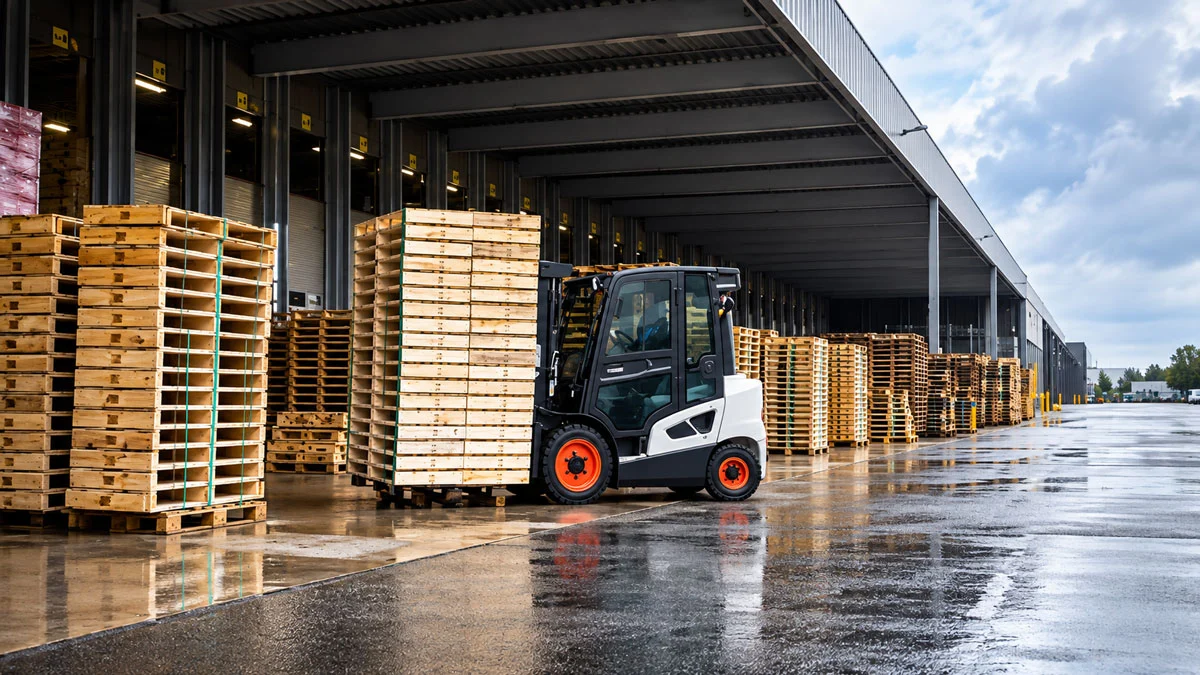
Electric forklifts have become an increasingly popular choice for warehouses, distribution centers, manufacturing facilities and material-handling operations. They are quiet, efficient and eliminate exhaust emissions at the point of operation. But what happens when an electric forklift needs to work outside and it starts raining?
The answer is not simply yes or no.
An electric forklift may be capable of operating in certain wet conditions, but that does not mean every electric forklift is designed to operate safely in rain. The level of protection depends on the machine, its electrical components, the manufacturer’s specifications and, importantly, its Ingress Protection (IP) ratings.
Understanding these ratings can help equipment owners and operators make better decisions about where and under what conditions their forklifts should be used.
Are Electric Forklifts Water Resistant?
Some electric forklifts and their electrical components are designed with protection against water, dust and other environmental contaminants. However, the degree of protection can vary significantly from one machine or component to another.
This is why it is important not to assume that an electric forklift is waterproof simply because it was designed for occasional outdoor operation.
There is an important difference between water-resistant and waterproof.
A water-resistant component may tolerate exposure to water under specifically defined conditions. That does not necessarily mean the component can withstand heavy rain, pressure washing, flooding or immersion.
The IP rating system helps define that distinction.
What Is an IP Rating?
IP stands for Ingress Protection. An IP rating indicates the level of protection an electrical enclosure provides against intrusion by solid objects and liquids.
You have probably seen ratings such as:
- IP54
- IP55
- IP65
- IP67
The two numbers have different meanings.
The first digit indicates protection against solid objects such as dust.
The second digit indicates protection against water.
For example, in an IP65 rating, the number 6 represents the enclosure’s level of protection against solid particles, while the number 5 represents its protection against water.
This distinction is particularly important when evaluating electric equipment that may operate in environments where rain, humidity, dust or debris are present.
Understanding Forklift Water-Resistance Levels
According to Bobcat’s explanation of forklift water-resistance ratings, the liquid-protection portion of the IP system ranges from 0 through 8.
| Water Rating | General Level of Protection |
|---|---|
| 0 | No protection against water |
| 1 | Protection against vertically dripping water |
| 2 | Protection against dripping water when tilted up to 15 degrees |
| 3 | Protection against spraying water |
| 4 | Protection against splashing water from different directions |
| 5 | Protection against projected water |
| 6 | Protection against powerful projected water |
| 7 | Protection against temporary immersion under defined conditions |
| 8 | Protection for continuous immersion under manufacturer-specified conditions |
The higher the second number, the greater the tested level of protection against liquid ingress under the conditions associated with that particular rating.
However, a higher number should never be interpreted as permission to operate equipment in any wet environment. The forklift manufacturer’s operating instructions and limitations remain essential.
What Does IP65 Mean?
IP65 is a rating commonly encountered on industrial electrical equipment.
The first digit, 6, represents the highest level of protection against solid particle ingress in this rating system. In practical terms, the enclosure is considered dust-tight under the applicable test standard.
The second digit, 5, indicates protection against water jets under specified testing conditions.
Therefore, an IP65-rated component provides substantial environmental protection, but IP65 does not mean the component is designed for immersion in water.
This distinction is critical.
An IP65 rating should also not automatically be applied to the entire forklift simply because one component, such as a motor or connector, carries that rating. Different parts of the machine may have different protection levels.
Why Electric Forklifts Need Environmental Protection
Electric forklifts contain numerous electrical and electronic systems.
Depending on the machine, these can include:
- Traction motors
- Hydraulic pump motors
- Battery systems
- Controllers
- Electrical connectors
- Sensors
- Displays
- Wiring
- Charging connections
Keeping water and contaminants away from sensitive electrical components is therefore an important part of equipment design.
Modern electric forklifts may incorporate sealed connectors, protected motors and other design features intended to increase reliability in challenging operating environments.
Can You Actually Drive an Electric Forklift in the Rain?
Potentially—but only if the forklift manufacturer specifies that the machine is suitable for those operating conditions.
The correct question is not simply, “Is this forklift electric?”
Instead, operators should ask:
- Is this specific forklift approved for outdoor operation?
- What IP protection does the equipment have?
- Which individual components carry those ratings?
- Are there manufacturer limitations concerning rain or water exposure?
- Are the battery and electrical connections properly protected?
- Do current weather conditions create additional operational hazards?
These questions provide a much better basis for determining whether equipment should be used in wet conditions.
Water Is Not the Only Risk When Operating in Rain
Even when a forklift’s electrical systems have suitable environmental protection, rain introduces other hazards that have nothing to do with the battery or electric motor.
Wet surfaces can reduce tire traction. Painted floors, metal loading plates, ramps and smooth concrete can become particularly slippery.
Heavy rain can also reduce operator visibility and make it more difficult to see pedestrians, obstacles and other equipment.
Water accumulation can hide potholes, uneven surfaces or debris.
Loads themselves may also behave differently when wet, particularly if packaging, pallets or materials become slippery.
Therefore, the decision to operate a forklift in rain should consider the entire operating environment—not simply the water resistance of its electrical components.
Puerto Rico Makes Water Resistance Especially Relevant
For operations in Puerto Rico, understanding equipment protection against environmental conditions can be particularly important.
Forklifts may routinely move between warehouses and outdoor loading areas, shipping facilities, distribution yards and other mixed-use environments.
Tropical weather can also change quickly, turning a normal outdoor operation into a wet environment within minutes.
Humidity represents another consideration. Equipment operating in tropical environments can experience prolonged exposure to moisture even when it is not directly exposed to rain.
For these reasons, companies operating forklifts in Puerto Rico should consider the expected environment when selecting equipment—not just lifting capacity, mast height or battery size.
Bobcat Electric Forklifts and Water Protection
Bobcat specifically addresses environmental protection in its electric forklift engineering.
The manufacturer notes that its electric forklifts use sealed motors and connectors intended to help the machines handle outdoor applications. Bobcat also uses IP-rated components on certain electric forklift systems.
This type of engineering is important for operations where a forklift may routinely transition between indoor and outdoor environments.
However, owners and operators should always consult the specifications and operator documentation for the particular Bobcat model being used rather than assuming that every model and component provides identical protection.
What Should You Check Before Operating in Wet Conditions?
Before using an electric forklift in a wet environment, operators and fleet managers should verify several factors.
First, review the operator’s manual and manufacturer recommendations for the specific forklift.
Inspect electrical connections and protective covers for visible damage. Damaged seals, connectors or enclosures can compromise the environmental protection originally designed into the machine.
Check tire condition and consider how the operating surface will respond to water.
Confirm that visibility is adequate and that outdoor lighting conditions are safe.
Operators should also evaluate whether water accumulation, drainage problems or flooding could create hazards that exceed the machine’s intended operating conditions.
Never Assume Pressure Washing Is Safe
Another common misunderstanding concerns cleaning.
A forklift or component having a water-resistance rating does not automatically mean it can be pressure washed.
High-pressure water can reach seals and connections differently from ordinary rain or splashing water. Cleaning chemicals can also affect seals, coatings and electrical components.
Always follow the manufacturer’s cleaning procedure and avoid directing water toward electrical systems unless the manufacturer specifically permits it.
Regular Inspection Is Important
An IP rating describes how a properly assembled component performed under defined test conditions. It does not eliminate the need for inspection and maintenance.
Over time, equipment can experience impacts, vibration, wear, damaged seals, loose covers and deteriorated connections.
A component that originally provided excellent environmental protection may no longer offer the same protection if its enclosure has been damaged.
Regular inspections are therefore especially important for forklifts frequently operating outdoors or in humid and wet environments.
Choosing the Right Forklift for Your Operating Environment
Forklift selection should always begin with the work the machine will actually perform.
Companies should consider:
- Indoor versus outdoor operation
- Exposure to rain and humidity
- Dust and debris
- Floor and terrain conditions
- Required lifting capacity
- Operating hours per shift
- Charging opportunities
- Battery technology
- Temperature conditions
A forklift designed primarily for a clean indoor warehouse may have very different requirements from a machine regularly operating between a warehouse, loading dock and outdoor storage yard.
Selecting equipment for the actual environment can improve reliability, safety and long-term operating value.
Water-Resistant Does Not Mean Waterproof
If there is one point equipment owners should remember, it is this: water-resistant and waterproof are not interchangeable terms.
An IP rating describes protection against specific types of exposure under standardized conditions.
It does not provide unlimited protection against rain, flooding, immersion or high-pressure cleaning.
Understanding exactly what the rating means—and following the manufacturer’s operating guidelines—is far more useful than simply looking for the highest number.
Conclusion
So, can you operate an electric forklift in the rain?
The answer depends on the specific forklift, its environmental protection, manufacturer specifications and actual operating conditions.
IP ratings provide a valuable way to understand how electrical enclosures and components are protected against dust and water. A rating such as IP65, for example, indicates strong dust protection and resistance to water jets under defined testing conditions—but it should never automatically be interpreted as meaning that an entire forklift is waterproof.
For operations in Puerto Rico, where forklifts frequently encounter humidity, rain and a combination of indoor and outdoor environments, understanding these ratings can be especially valuable.
Choosing the right equipment—and maintaining it correctly—helps protect your investment while supporting safer and more reliable material-handling operations.
Find the Right Forklift for Your Operation
Multibatteries & Forklifts, CRL provides forklift sales, rentals, parts, batteries, maintenance and equipment solutions for businesses throughout Puerto Rico.
Whether you need an electric forklift for warehouse operations or equipment capable of handling demanding indoor and outdoor applications, our team can help you evaluate the right solution for your operating environment.
Phone: 787-704-7100
Email: Info@mbfpr.com